Choosing an Acetic Acid Plant can strengthen a business that serves coatings, textiles, plastics, food ingredients, and chemical manufacturing. Demand may be steady, but investment decisions require more than attractive market forecasts. A practical evaluation should examine feedstock access, utility consumption, production scale, product purity, and plant reliability. These factors directly affect operating costs and customer confidence.
A well-designed facility usually combines controlled reaction systems, corrosion-resistant equipment, efficient separation units, and dependable storage areas. Stainless steel piping, sealed transfer lines, and clearly monitored tanks can reduce contamination and handling risks. In my experience, small details matter. A stable temperature reading or a clean sampling point can prevent costly quality disputes. Independent laboratory testing also supports consistent specifications and traceable results.
However, no Acetic Acid Plant is automatically profitable. That assumption deserves scrutiny. Local infrastructure, skilled operators, maintenance capacity, and environmental performance can change the business case. Energy prices may shift. Customer demand may weaken. A responsible feasibility study should test conservative scenarios, not only optimistic projections. It should also include emergency planning, worker training, waste management, and regular equipment inspections.
Choosing the right technology partner adds another layer of assurance. Experienced suppliers should explain performance limits, commissioning support, spare-parts planning, and expected maintenance intervals. Transparent documentation is essential. So is honest communication about uncertainty. When technical evidence, operational experience, and financial discipline work together, an Acetic Acid Plant can become a reliable foundation for long-term industrial growth. The opportunity is real, but careful judgment remains essential.
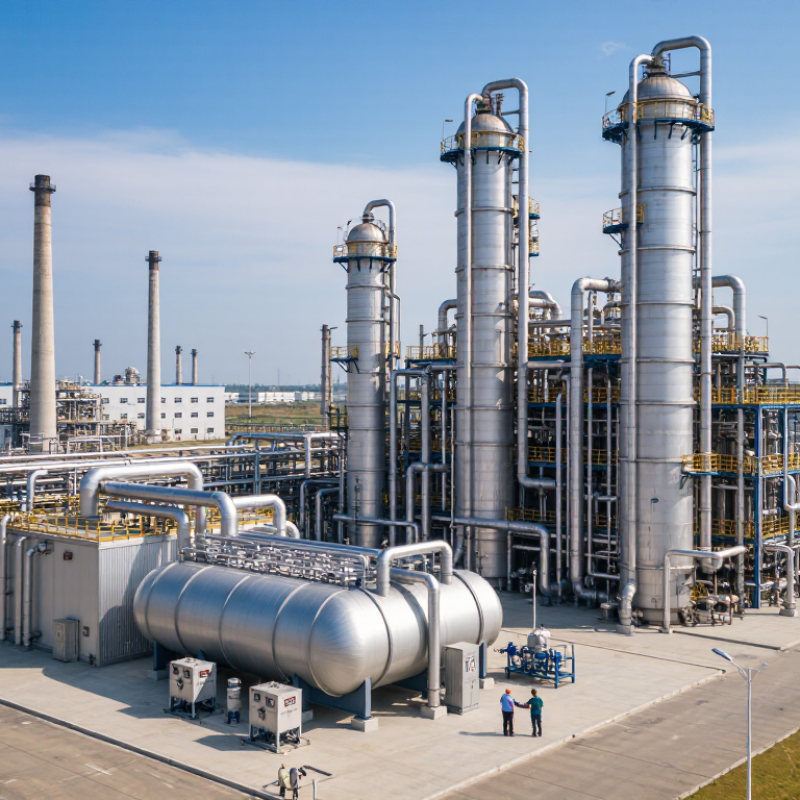
An acetic acid plant converts selected feedstocks into controlled, saleable acid streams. In the dominant carbonylation route, methanol reacts with carbon monoxide inside a catalytic reactor. The process then separates water, light compounds, and catalyst-related residues. Its main product is glacial acetic acid, usually above 99.5% purity. It can also make calibrated aqueous solutions for industrial customers. Integrated sites may feed acid into vinyl acetate, acetate ester, or acetic anhydride units. Those are downstream products, not automatic outputs. That distinction matters when estimating revenue and equipment. Industry outlooks from S&P Global Commodity Insights in 2024 place worldwide acetic acid demand near 20 million metric tons annually. Demand is spread across polymers, solvents, coatings, and food-related applications.
A functioning plant is more than a reactor. It includes distillation columns, heat exchangers, storage tanks, loading systems, wastewater treatment, and continuous monitoring. The European Chemicals Agency records acetic acid’s melting point near 16.6°C. Cold mornings can therefore crystallize material in pipes. Heated storage and traceable temperature control become practical requirements. US EPA AP-42 guidance highlights process vents, tank breathing, and wastewater as emission-control points. In real projects, purity targets may look simple on paper. Feedstock variability, corrosion, energy prices, and maintenance often change the result. A capacity figure alone is not enough. Site data must be checked. Some designs also underestimate downtime during catalyst changeovers. That is an uncomfortable, but useful, planning lesson.
An acetic acid plant transforms measured feedstock into a controlled chemical stream. In the common methanol carbonylation route, methanol reacts with carbon monoxide inside a pressurized catalytic reactor. The theoretical equation is precise: 32.04 kilograms of methanol can produce 60.05 kilograms of acetic acid, according to molecular-weight data from the National Institute of Standards and Technology. Real plants achieve less. Purity, catalyst performance, gas losses, and maintenance all affect output.
The reactor effluent then enters flash separation and several distillation stages. These steps remove water, unreacted materials, and light impurities. The European Commission’s Best Available Techniques Reference Document for Large Volume Organic Chemicals highlights heat integration, closed handling, and vapor recovery as important process controls. That guidance matters because distillation can consume substantial energy. A small temperature imbalance may also reduce product quality.
The 2023 Acetic Acid study from S&P Global Commodity Insights places global demand near 18 million metric tons annually. Such demand supports integrated plants with reliable feedstock storage, automated monitoring, and recovery systems. Yet capacity alone is not enough. Operators must test feedstock purity, manage carbon monoxide safely, and inspect corrosion-prone equipment. A neat process diagram can hide difficult field conditions. This is where practical experience often challenges the spreadsheet.
Why Choose an Acetic Acid Plant for Your Business?
Acetic acid supports several essential manufacturing chains. Chemical Economics Handbook estimates global consumption at more than 18 million metric tons annually. Demand comes mainly from vinyl acetate monomer, purified terephthalic acid, acetate esters, and acetic anhydride. These intermediates enter paints, packaging films, textiles, adhesives, and industrial coatings.
The packaging sector uses acetic acid indirectly through polymers and coating materials. Textile producers rely on acetate fibers and dyeing auxiliaries. Food processors use controlled, food-grade acetic acid in vinegar, pickling, and acidity regulation. Pharmaceutical production also requires high-purity grades for synthesis and formulation processes. Small purity differences matter here.
Market reports from IMARC Group and Grand View Research value the global acetic acid market above 20 billion dollars. Their forecasts also indicate steady growth through the next decade. However, reported figures differ because analysts define the market differently. That inconsistency deserves attention before approving a new plant.
A local plant can reduce freight exposure and improve feedstock control. It may also supply several grades from one site. Reliable monitoring is essential. Acetic acid is corrosive, so storage tanks, transfer lines, ventilation, and emergency systems require disciplined engineering. A plant designed only for volume can struggle with purity changes, utility costs, and changing customer specifications. Real operating data should guide capacity decisions, not optimistic forecasts alone.
Why Choose an Acetic Acid Plant for Your Business?
An acetic acid plant can give manufacturers stronger control over supply, quality, and production costs. Instead of depending entirely on external deliveries, a business can produce according to daily demand. This reduces waiting time when markets become unstable. It also supports more consistent product specifications. In practice, operators can monitor temperature, pressure, concentration, and batch records closely. These details matter when customers expect reliable performance in chemical processing, textiles, coatings, or food-grade applications.
The business value extends beyond production volume. A well-designed plant may recover heat, reduce material losses, and reuse selected process streams. It can also create skilled technical jobs near the facility. However, the economics are not always simple. Construction requires serious capital, trained personnel, maintenance planning, and strict environmental controls. Energy prices can change the expected return. A plant that looks profitable on paper may perform differently after commissioning. That gap deserves honest review.
Tips: Compare internal production costs with long-term purchasing costs. Measure energy use per tonne, not only total output. Build safety checks into every operating stage. Keep emergency response equipment accessible and tested. Review wastewater, emissions, and storage requirements with qualified specialists. Small design choices can affect years of operating expenses. They can also affect worker confidence. A reliable plant is not merely large; it is measurable, maintainable, and prepared for unexpected downtime.
Acetic acid supports a diversified downstream market. Vinyl acetate monomer, purified terephthalic acid, acetate esters, acetic anhydride, and food or pharmaceutical applications create multiple sales channels, helping producers reduce dependence on a single end-use sector.
Data shown are representative global end-use shares based on commonly reported industry estimates; actual regional demand varies by year and market.
Why Choose an Acetic Acid Plant for Your Business?
Plant capacity should follow contracted demand, feedstock access, and realistic operating rates. A large nameplate capacity can hide weak utilization. I would test 70%, 85%, and 95% scenarios before approving investment. Use methanol, electricity, steam, water, labor, maintenance, and waste-treatment costs in the model. The U.S. Energy Information Administration’s 2024 outlook shows continued volatility in industrial energy prices. That makes utility sensitivity important. It is easy to underestimate cooling and wastewater costs.
Safety must shape the plant layout, not decorate the final report. NIOSH lists 50 ppm as acetic acid’s immediately dangerous concentration. OSHA’s permissible exposure limit is 10 ppm as an eight-hour average. Closed transfer lines, gas detection, emergency showers, corrosion-resistant materials, and secondary containment are practical controls. Operators also need drills with clear, short procedures. A spreadsheet cannot manage a leak.
Sustainability requires measurable boundaries. The International Energy Agency identifies chemicals as using about 30% of industrial energy demand. Compare heat integration, low-carbon electricity, water reuse, and carbon intensity per tonne. Follow ISO 14040 and ISO 14044 principles when preparing a life-cycle assessment. Verify emissions with calibrated meters and independent review. Some projects claim efficiency without counting steam imports. That is a serious gap. A smaller plant with stable feedstock, safer logistics, and lower emissions may outperform a larger one.
| Evaluation Area | Key Dimension | Indicative Data or Benchmark | Business Relevance | What to Verify Before Investment |
|---|---|---|---|---|
| Capacity | Typical plant scale | Approximately 50,000–600,000 metric tonnes per year | Capacity should match contracted demand, feedstock availability, logistics, and future expansion plans. | Confirm the minimum economic scale, debottlenecking potential, storage capacity, and expected operating rate. |
| Capacity | Recommended utilization assumption | Use 85%–95% of nameplate capacity for mature operations; use a lower figure during ramp-up | Using nameplate capacity as expected production can overstate revenue and understate unit costs. | Review commissioning time, planned maintenance, feedstock interruptions, and historical reliability of comparable units. |
| Capacity | Process route | Methanol carbonylation is the dominant modern route for large-scale production | The process route influences raw-material cost, catalyst management, corrosion control, energy consumption, and emissions. | Evaluate catalyst system, water management, by-product formation, licensing terms, and process guarantees. |
| Capacity | Stoichiometric feed relationship | Theoretical reaction: 1 mol methanol + 1 mol carbon monoxide → 1 mol acetic acid; approximately 0.533 tonnes of methanol and 0.466 tonnes of carbon monoxide per tonne of acid before losses | Feedstock planning is central to operating cost and plant location. | Include practical yield losses, recycle requirements, feed purity, supply interruptions, and utility consumption. |
| Capital Cost | Indicative installed investment | Rough order of magnitude: USD 40–150 million for 50–100 kt/y; USD 100–300 million for 100–300 kt/y; USD 250–700 million for 300–600 kt/y | Large plants may lower unit capital cost, but they require greater upfront funding and stronger market commitments. | Obtain a location-specific estimate covering process units, utilities, storage, infrastructure, contingency, and escalation. |
| Capital Cost | Cost-estimate accuracy | Early concept estimates may carry an accuracy range of roughly −30% to +50%; definition-stage estimates are more reliable | Investment decisions made from early estimates should include adequate contingency and sensitivity analysis. | Check estimate class, pricing date, foreign-exchange assumptions, construction productivity, and owner’s costs. |
| Operating Cost | Main cost drivers | Methanol and carbon monoxide commonly represent the largest variable-cost components, followed by utilities, maintenance, labor, and waste treatment | Feedstock price volatility can have a greater effect on margins than small efficiency improvements. | Model feedstock formulas, utility tariffs, catalyst replacement, water treatment, labor, maintenance, and logistics. |
| Operating Cost | Utility requirements | Steam, electricity, cooling water, process water, nitrogen, instrument air, and wastewater treatment are normally required | Utility availability and reliability can determine both production cost and plant uptime. | Request guaranteed utility consumption per tonne and verify site utility capacity during peak conditions. |
| Market | Major product applications | Vinyl acetate monomer, purified terephthalic acid, acetate esters, acetic anhydride, solvents, and industrial chemicals | Diverse downstream applications can reduce dependence on a single customer segment. | Assess regional demand, customer specifications, product purity, contract duration, and competing supply. |
| Market | Product quality | Industrial grades commonly require high-purity acetic acid; exact specifications depend on the downstream application | Quality consistency affects customer qualification, pricing, and the ability to serve higher-value markets. | Define limits for water, formic acid, aldehydes, metals, halides, color, and other application-specific impurities. |
| Safety | Hazard profile | Glacial acetic acid is corrosive and combustible; its flash point is approximately 39°C in a closed-cup test | Storage, transfer, ventilation, ignition control, and emergency response require careful design. | Use the applicable safety data sheet, local fire code, hazardous-area classification, and consequence modeling. |
| Safety | Storage and transfer | Use compatible materials, closed transfer systems, secondary containment, leak detection, and controlled loading areas | Most serious risks occur during storage, loading, unloading, maintenance, and abnormal operations. | Confirm materials compatibility, tank design, relief systems, bund capacity, drainage isolation, and emergency shutdown logic. |
| Safety | Process safeguards | Typical safeguards include high-pressure trips, high-temperature alarms, interlocks, emergency depressurization, gas detection, and fire protection | Layered protection reduces the likelihood and consequence of loss-of-containment events. | Review HAZID, HAZOP, LOPA, SIL assessments, management-of-change procedures, and operator training. |
| Environmental | Carbon intensity | Carbon intensity depends strongly on methanol origin, carbon monoxide source, electricity mix, steam system, and plant efficiency | A low-carbon feedstock and energy strategy can improve regulatory resilience and customer acceptance. | Complete a cradle-to-gate greenhouse-gas assessment using transparent boundaries and independently verifiable data. |
| Environmental | Emission-control priorities | Key controls include closed vent systems, vapor recovery, condensers, flare or thermal oxidation systems, and leak detection and repair | Volatile organic compound emissions can affect permitting, worker exposure, odor, and community relations. | Confirm emission limits, monitoring frequency, control-device efficiency, fugitive-emission program, and permit conditions. |
| Environmental | Water and wastewater | Water use arises from cooling, steam generation, washing, and wastewater treatment; contaminated streams may contain acidic organics and dissolved chemicals | Water availability and discharge limits can constrain site selection and operating costs. | Balance water demand, recycling opportunities, effluent quality, treatment capacity, discharge permits, and drought exposure. |
| Sustainability | Energy-efficiency opportunities | Heat integration, high-efficiency separation, condensate recovery, variable-speed drives, and optimized steam systems can reduce energy use | Lower energy intensity improves margins and reduces indirect emissions. | Require an energy-integration study, utility balance, heat-recovery targets, and performance guarantees. |
| Sustainability | Feedstock strategy | Potential lower-carbon options include renewable electricity, low-carbon hydrogen-derived methanol, and captured-carbon pathways where technically and economically viable | Feedstock selection may become a significant differentiator as customers adopt product-carbon requirements. | Verify feedstock traceability, additionality claims, certification rules, cost premiums, and long-term availability. |
| Logistics | Site and infrastructure | A suitable site generally requires reliable power, steam or fuel, water, transport access, tank storage, emergency services, and chemical-handling infrastructure | Infrastructure constraints can delay construction and increase both capital and operating costs. | Assess port, rail, road, pipeline, warehouse, utility redundancy, flood risk, seismic risk, and community buffer zones. |
| Financial | Investment decision metrics | Evaluate net present value, internal rate of return, payback period, break-even price, debt-service coverage, and downside cases | Profitability depends on the spread between product prices, feedstock costs, utilities, freight, and fixed costs. | Stress-test feedstock prices, selling prices, utilization, construction delays, carbon costs, exchange rates, and maintenance outages. |
| Implementation | Development schedule | A large chemical project commonly requires several years from feasibility and permitting through engineering, construction, commissioning, and ramp-up | Schedule delays can increase financing costs and postpone revenue generation. | Develop a permitting plan, front-end engineering schedule, long-lead equipment list, contracting strategy, and commissioning plan. |
Chemical, packaging, textile, coating, food, and pharmaceutical industries use it indirectly or directly. Demand exceeds 18 million metric tons annually. Small purity differences matter.
It supports vinyl acetate monomer, purified terephthalic acid, acetate esters, and acetic anhydride. These materials enter paints, films, textiles, adhesives, and coatings.
Packaging manufacturers use it through polymers and coating materials. These materials can improve film performance, surface protection, and processing consistency.
Local production can reduce freight exposure and shorten supply delays. It may also improve feedstock control and support multiple product grades. Not always.
Operators should monitor temperature, pressure, concentration, and batch records. Storage tanks, transfer lines, ventilation, and emergency systems need disciplined engineering.
It may reduce purchasing costs, material losses, and selected energy expenses. Heat recovery and process-stream reuse can improve efficiency. Energy prices may change the result.
Compare internal costs with long-term purchasing costs. Measure energy use per tonne, not only total output. Construction, staffing, maintenance, and environmental controls require substantial investment.
Use real operating data, customer specifications, and measured demand. Avoid relying only on optimistic market forecasts. Reality can disagree.
The plant needs tested emergency equipment, suitable storage, controlled emissions, and wastewater planning. Qualified specialists should review these systems before operation. Small design choices matter.
An Acetic Acid Plant is a specialized industrial facility designed to convert selected feedstocks into acetic acid through controlled chemical processes. Its production system typically includes feedstock preparation, reaction, separation, purification, storage, and quality control. The resulting acetic acid can serve as a raw material for products such as acetate compounds, solvents, coatings, adhesives, textiles, plastics, food-related processing materials, and other industrial chemicals.
Choosing an Acetic Acid Plant can offer businesses a reliable supply of an essential chemical, improved control over production quality, and opportunities to reduce logistics costs. However, careful evaluation is necessary before investment. Key considerations include plant capacity, feedstock availability, energy consumption, construction and operating costs, process reliability, worker safety, emissions control, waste management, and long-term sustainability. A well-designed facility should balance production efficiency with regulatory compliance, environmental responsibility, and the flexibility to respond to changing market demand.

Pulisi