7 Tips for Buying Sodium Sulphide Red Flakes?

Time:2026-09-19 Author:Oliver
0%

Buying Sodium Sulphide Red Flakes requires more than comparing prices. Product appearance can be misleading. Bright red flakes may still contain excessive moisture, iron, or unwanted impurities. These differences can affect dyeing, mineral processing, wastewater treatment, and other industrial applications. The wrong grade may create unstable results, clogged equipment, or costly production delays.

Dr. Li Wei, an industrial chemical sourcing specialist, offers a practical warning: “A low price is not a low cost when purity and moisture change during transit.” This principle shapes the seven tips in this guide. The discussion covers purity specifications, sodium sulfide concentration, flake size, packaging strength, certificates of analysis, supplier experience, and delivery reliability. Buyers should request current test data, not recycled documents. Check the production date, batch number, moisture level, and visible condition of the material. Small details matter.

Do not rely on color alone.

A supplier may answer quickly but provide vague technical information. That is a warning sign. Another supplier may offer excellent documentation yet lack dependable export experience. Both situations deserve careful review. The buying process is not perfectly predictable. Weather, storage conditions, loading practices, and port delays can influence product quality. Responsible buyers leave room for these risks and verify critical information before placing an order. With a clear checklist and realistic expectations, Sodium Sulphide Red Flakes can be sourced more safely, consistently, and economically.
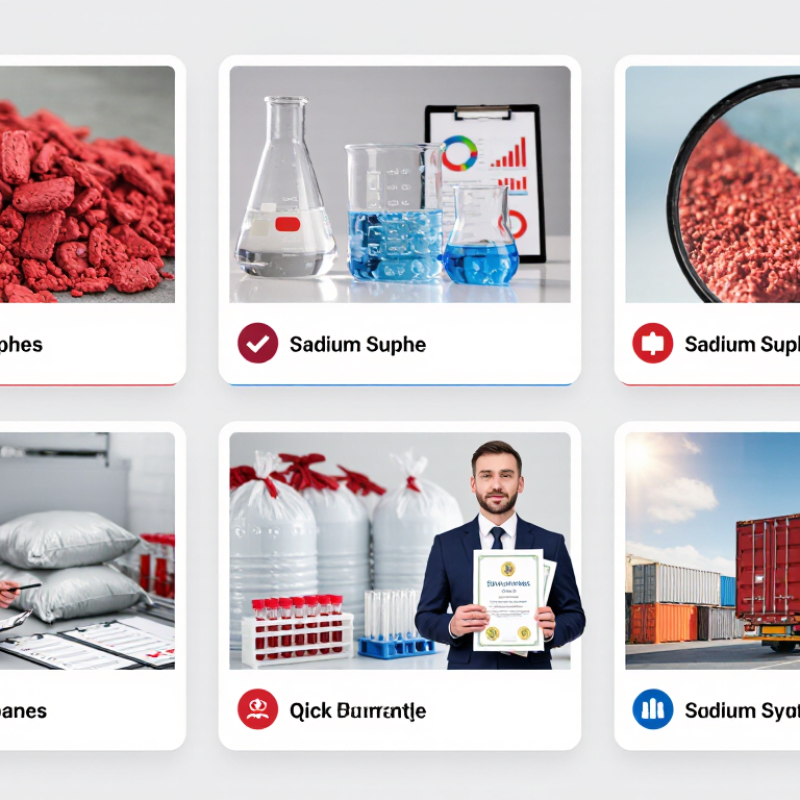
7 Tips for Buying Sodium Sulphide Red Flakes?

What Is Sodium Sulphide Red Flakes and What Are They Used For?

Sodium sulphide red flakes are solid industrial sodium sulphide, usually written as Na₂S. The red or brown appearance often comes from iron compounds or polysulphides. It does not prove higher purity. PubChem lists sodium sulphide at a molecular weight of 78.04 g/mol. Commercial grades commonly specify about 60% or 62% Na₂S, although moisture and impurity limits differ. Check the certificate of analysis, not only the colour.

These flakes are used in leather processing to loosen hair from hides. They also support kraft pulping, sulfur-dye production, and selected mining processes. In a wet tank, the flakes dissolve into a strongly alkaline solution. The ILO-WHO International Chemical Safety Card warns that contact with acids can release hydrogen sulphide gas. Ventilation, sealed packaging, and trained handling are essential. The European Chemicals Agency also identifies sodium sulphide as corrosive and environmentally hazardous under relevant classifications.

When buying, compare Na₂S assay, iron content, insoluble matter, moisture, flake size, and packaging strength. A practical specification should state test methods and batch numbers. Ask for a recent SDS and certificate of analysis. One common mistake is choosing the darkest red material. That choice may indicate contamination instead of performance. I would also question unusually low prices; transport, moisture protection, and disposal controls affect the real cost. Keep the product dry, because damaged bags can form hard, uneven lumps.

7 Tips for Buying Sodium Sulphide Red Flakes: What Are They Used For?

Sodium sulphide red flakes are solid sodium sulfide products commonly supplied in flake form. They are used in leather processing, mineral flotation, textile dyeing, and wastewater treatment. When selecting a product, compare the certificate of analysis, assay, iron content, insoluble matter, moisture, flake size, packaging, and transport requirements.

Chart explanation: The chart shows typical process-pH windows associated with several sodium sulfide applications. Actual operating conditions depend on the raw materials, process design, temperature, concentration, and local operating procedures. Use the application range as a selection reference, not as a substitute for a validated process recipe.

7 Buying Tips

  1. Check the Na2S assay: Confirm the stated sodium sulfide content and whether it is reported on an as-is or dry basis.
  2. Review iron and insoluble matter: Low iron and low insoluble content are important for applications that require cleaner process liquor or consistent color.
  3. Confirm moisture and storage stability: Sodium sulfide is hygroscopic, so moisture content and resistance to caking should be evaluated.
  4. Match flake size to your handling system: Particle size affects feeding, dissolution speed, dust generation, and manual handling.
  5. Request a recent certificate of analysis: The certificate should identify assay, iron, insoluble matter, moisture, lot number, and test date.
  6. Verify packaging and transport: Packaging should protect the flakes from moisture and physical damage during storage and shipment.
  7. Plan for safe handling: Sodium sulfide can release toxic hydrogen sulfide gas if it contacts acids. Store it dry, keep it separated from acids, and follow the applicable safety data sheet.

How to Check Product Purity, Grade, and Chemical Specifications

Buying sodium sulphide red flakes requires more than checking a bright red appearance. Tip 1: Confirm the chemical formula and assay basis. Sodium sulphide may be reported as Na2S, Na2S·xH2O, or total sulfide. The OECD SIDS assessment lists anhydrous sodium sulphide at 78.05 g/mol. Hydration changes the calculation. Tip 2: Request a recent certificate of analysis, not a general brochure. Check assay, iron, sodium carbonate, moisture, and insoluble matter.

Tip 3: Compare the stated grade with your process. Technical grade may suit wastewater treatment or textile processing, while stricter applications need tighter impurity limits. Tip 4: Review the test methods on the certificate. A result without a method is incomplete. ASTM E300 provides guidance for representative sampling of industrial chemicals. Sampling errors still happen. Tip 5: Ask for batch-specific data, production date, and retest date. Do not rely on one historical report.

Tip 6: Inspect packaging and storage evidence. Red flakes should arrive in sealed, dry containers, with no strong moisture damage or hardened blocks. Sodium sulphide reacts with moisture and acids, releasing hazardous gases. The UN Globally Harmonized System classifies relevant hazards through standardized labels and safety data sheets. Tip 7: Match the SDS to the exact product and concentration. ISO 11014 guidance supports consistent SDS content, but documents can still contain omissions. I would verify unusual purity claims with an independent laboratory before purchase, especially when iron limits affect product color or downstream reactions.

How to Evaluate Packaging, Storage, and Transportation Requirements

Buying sodium sulphide red flakes requires more than checking purity and price. Packaging, storage, and transport conditions can affect product quality and workplace safety. The UN Model Regulations, 23rd revised edition, identify relevant sodium sulphide forms as Class 8 corrosive materials. Classification depends on hydration and composition, so confirm the exact product before purchase.

Tip 1: Inspect the packaging specification.

Choose UN performance-tested drums or bags with a strong moisture barrier, sealed liners, and clear batch labels. The container should show net weight, hazard information, production date, and the current Safety Data Sheet reference. A clean outer drum is not proof of good protection. Ask for photos of seals and pallets.

Tip 2: Review the storage plan.

The ECHA registration dossier identifies sodium sulphide as corrosive and hazardous to aquatic environments. Store flakes in a cool, dry, ventilated area, away from acids, water sources, and incompatible chemicals. Keep containers closed and raised from the floor. Even minor moisture can cause caking and may release toxic hydrogen sulphide gas. That detail is easy to underestimate.

Tip 3: Check transportation documents carefully.

The carrier should verify the correct UN number, packing group, labels, emergency procedures, and mode-specific rules under the applicable dangerous-goods code. Use covered vehicles and moisture-resistant loading protection. The International Maritime Dangerous Goods Code requires accurate declarations and segregation controls. I would recheck every document before dispatch, because product names alone can cause costly mistakes.

How to Compare Suppliers, Prices, and Order Terms

When buying sodium sulphide red flakes, compare more than the quoted price. Ask suppliers for a current specification sheet, batch number, assay range, moisture level, and particle size. Request a recent certificate of analysis when your process requires tight control. In practical purchasing, inconsistent flakes can change reaction time and waste a production shift. Clear technical documents often reveal more than polished sales language. Still, documents deserve verification.

Build a landed-cost table for every supplier. Include product price, packaging, inland transport, freight, insurance, duties, and unloading fees. A lower offer may become expensive after delivery costs.

Check whether bags, drums, or lined containers suit your storage area. Confirm the minimum order quantity and whether partial shipments are allowed. Small details matter.

Review the order terms line by line. Confirm lead time, payment schedule, inspection rights, claim deadlines, and replacement procedures. Ask for the safety data sheet and written confirmation of compliant transport arrangements. Specify how damaged or wet material will be handled. One common mistake is accepting vague wording such as “standard quality.” Define measurable limits instead. Prices can change with supply conditions, so request a validity period in writing. My checklist is not perfect; reviewing it with a qualified procurement or safety professional can expose overlooked risks.

How to Confirm Safety, Compliance, and After-Sales Support

Buying sodium sulphide red flakes requires more than checking purity and price. Ask for a current Safety Data Sheet, Certificate of Analysis, and batch traceability record. The documents should show CAS number 1313-82-2, assay, moisture, impurities, and testing dates. Compare these details with your application requirements. A clean-looking bag proves very little.

Safety depends on handling details. Confirm that packaging is sealed, moisture-resistant, clearly labelled, and suitable for regulated transport. Request the supplier’s GHS labels and transport documents before shipment. Store the flakes in a dry, well-ventilated area, away from acids and incompatible materials. Acid contact can release toxic hydrogen sulphide gas. Your local authority may require additional storage or import controls, so check them directly. Do not rely only on a supplier’s verbal assurance.

After-sales support should be specific, not decorative. Ask who handles damaged packaging, off-specification results, delivery delays, and technical questions. A dependable supplier should provide a written complaint process, response times, retained samples, and replacement or credit terms. Request photos of the actual packaging before dispatch. It is a small step, but often revealing. I would also test a small batch before approving a larger order. This may slow purchasing, yet one overlooked moisture problem can disrupt production. My own checklist would include emergency contact details, updated documents, and clear responsibility after delivery. Availability alone is not support.

7 Tips for Buying Sodium Sulphide Red Flakes? – How to Confirm Safety, Compliance, and After-Sales Support

No. Buying Tip What to Verify Reliable Evidence or Test Practical Acceptance Criteria Buyer Action
1 Confirm the exact chemical identity Confirm whether the product is anhydrous sodium sulfide or hydrated sodium sulfide flakes. “Red flakes” is a commercial appearance description, not a unique chemical specification. Review the product specification, SDS, Certificate of Analysis (CoA), CAS number, hydration state, and stated Na2S concentration. The purchase order, label, SDS, and CoA should describe the same material. Common reference identifiers include CAS 1313-82-2 for sodium sulfide and CAS 1313-84-4 for sodium sulfide hydrate; verify the applicable form. Do not approve material based on color alone. Require a written product specification before sampling or shipment.
2 Check assay and physical quality Check active sodium sulfide content, sodium hydroxide or carbonate impurities, iron, insoluble matter, moisture, flake size, and visible contamination. Compare the lot-specific CoA with an independent laboratory test or an agreed incoming inspection method. Use a representative sample from multiple packages. Set numerical limits in advance. A typical purchase specification may include an agreed Na2S assay, moisture range, maximum insolubles, maximum iron, and a defined particle-size distribution; these limits are product- and application-specific, not universal. Place the agreed limits on the purchase order and define the sampling plan, test method, and rejection procedure.
3 Validate hazardous-material classification Confirm the transport name, UN number, hazard class, packing group, labels, packaging instructions, and emergency contact information for the actual formulation and concentration. Review the current SDS Section 14 and the supplier’s dangerous-goods declaration. For hydrated sodium sulfide, UN 1849 is commonly used, with Class 8 corrosive classification and Packing Group III; the carrier and jurisdiction must confirm the final entry. Shipping documents, package markings, labels, and transport classification must match the supplied product and the applicable modal regulations. Obtain dangerous-goods approval before booking transport. Do not rely on a generic SDS or an old shipping classification.
4 Review safety data and handling controls Confirm hazards relating to skin and eye corrosion, dust exposure, environmental release, and toxic hydrogen sulfide formation when sulfides contact acids. Require a current 16-section SDS in the destination-market language, plus written PPE, ventilation, spill-response, first-aid, and incompatibility guidance. The SDS should clearly state: keep away from acids, prevent dust and moisture exposure, use suitable eye/skin protection, and provide access to fresh air and emergency medical assistance after exposure. Complete a site risk assessment and ensure workers are trained before unloading, opening, or dosing the flakes.
5 Confirm regulatory and environmental compliance Check chemical-inventory status, import or registration duties, worker-safety rules, wastewater restrictions, packaging requirements, and local storage permits. Request a written compliance statement, SDS, technical specification, batch traceability record, and any required regulatory or customs documents for the destination country. Compliance must be checked against the destination jurisdiction. Requirements may differ under systems such as GHS, REACH, TSCA, or other national chemical-control laws. Ask the importer of record or regulatory advisor to confirm obligations before signing a long-term supply contract.
6 Inspect packaging, storage, and transport condition Check moisture barriers, package integrity, tamper evidence, net weight, batch number, manufacture date, pallet stability, and exposure to heat or water. Inspect the container and shipping photographs before dispatch and document the condition at receipt. Verify that labels remain legible and packages are undamaged. Store in a cool, dry, well-ventilated area in tightly closed compatible packaging; segregate from acids, oxidizers, and moisture. Use first-in, first-out stock control. Define packaging standards, maximum transit exposure, unloading controls, and a documented process for damaged or wet packages.
7 Evaluate after-sales support and traceability Confirm response time, complaint handling, technical assistance, replacement policy, retained samples, and the ability to trace each delivery to a production batch. Request a written service-level agreement covering document corrections, investigation timelines, nonconforming-product handling, and emergency contact availability. Each shipment should have a lot number, CoA, packing list, SDS access, and a defined escalation route. Agree on complaint acknowledgement and corrective-action deadlines before purchase. Start with a trial order, record supplier performance, and make future orders conditional on consistent quality and documented corrective action.
Key safety fact: Sodium sulfide can generate toxic hydrogen sulfide gas when it contacts acids. Keep the material dry, segregate it from acids, and follow the current SDS and applicable dangerous-goods regulations.

FAQS

What are sodium sulphide red flakes?

They are solid industrial sodium sulphide, commonly written as Na₂S. Their red or brown colour may come from iron compounds or polysulphides. Colour alone does not prove purity.

What does commercial strength usually mean?

Commercial grades often contain about 60% or 62% Na₂S. Moisture and impurity limits can vary. Check the certificate of analysis carefully.

Where are these flakes used?

They help remove hair from hides during leather processing. They also support kraft pulping, sulfur-dye production, and selected mining processes.

What happens when the flakes contact water?

They dissolve into a strongly alkaline solution. Workers need suitable training, ventilation, and protective procedures. Keep nearby surfaces dry and clean.

Why must acids be kept away?

Acid contact can release toxic hydrogen sulphide gas. Store the flakes away from acids and incompatible materials. This warning is easy to underestimate.

Which documents should buyers request?

Request a current Safety Data Sheet and Certificate of Analysis. Documents should show CAS number 1313-82-2, assay, moisture, impurities, and testing dates.

How can buyers judge product quality?

Compare assay, iron content, insoluble matter, moisture, flake size, and packaging strength. Batch numbers and test methods should appear clearly. A clean bag proves little.

What storage and packaging details matter?

Use sealed, moisture-resistant packaging with clear labels. Store the flakes in a dry, well-ventilated area. Damaged bags may create hard, uneven lumps.

What after-sales support should a supplier provide?

Ask about damaged packages, off-specification results, delays, and technical questions. Written response times, retained samples, and replacement terms are useful. Availability is not support.

Should buyers test a large shipment immediately?

Testing a small batch first can reveal moisture problems or inconsistent performance. It may slow purchasing. I would still avoid trusting unusually low prices.

Conclusion

Buying Sodium Sulphide Red Flakes requires more than comparing quoted prices. First, understand the product’s typical industrial uses and confirm whether the material matches your intended application. Review the purity level, grade, active content, moisture, iron concentration, and other chemical specifications through a recent certificate of analysis and reliable testing documentation. Clear specifications help prevent inconsistent performance and unexpected production problems.

You should also evaluate packaging quality, labeling, storage conditions, and transportation arrangements, since Sodium Sulphide Red Flakes require careful handling and protection from moisture. Compare suppliers according to product consistency, pricing transparency, minimum order quantities, lead times, payment terms, and delivery capabilities rather than choosing solely by the lowest offer. Before placing an order, confirm safety data, regulatory compliance, handling instructions, and emergency procedures. A dependable supplier should also provide responsive communication, complete documentation, sample support when appropriate, and practical after-sales assistance for quality issues or shipment concerns.

Oliver

Oliver

Oliver is a seasoned marketing professional with a wealth of expertise in driving brand awareness and engagement. With a deep understanding of our company's product offerings, he consistently delivers high-quality content that enriches our professional blog. His insights not only shed light on......